Fire damage cleanup starts within the first 24 hours
Has your house just gone through a fire, and now you're staring at soot-covered walls and soaked carpet? That first day feels overwhelming. You want the mess gone, but you don't want to make it worse.
For over 20 years, our IICRC-certified crews have handled that exact first 24 hours across the Colorado Front Range — including the area FEMA sent its first-ever wildfire Mitigation Assessment Team to study after the Marshall Fire hit Boulder County.[1]
Fire damage cleanup covers everything that happens before rebuilding starts: debris removal, soot wipe-down, water extraction, and securing what's left. Get this stage right, and the rest of your recovery moves faster. Rush it or skip a step, and you risk mold, permanent stains, and a smaller insurance settlement.
So let's walk through what actually needs to happen first.
Soot is acidic or alkaline, depending on what burned. Left on glass, brass, or aluminum for 24 to 48 hours, it starts to etch and corrode the surface for good.[1]
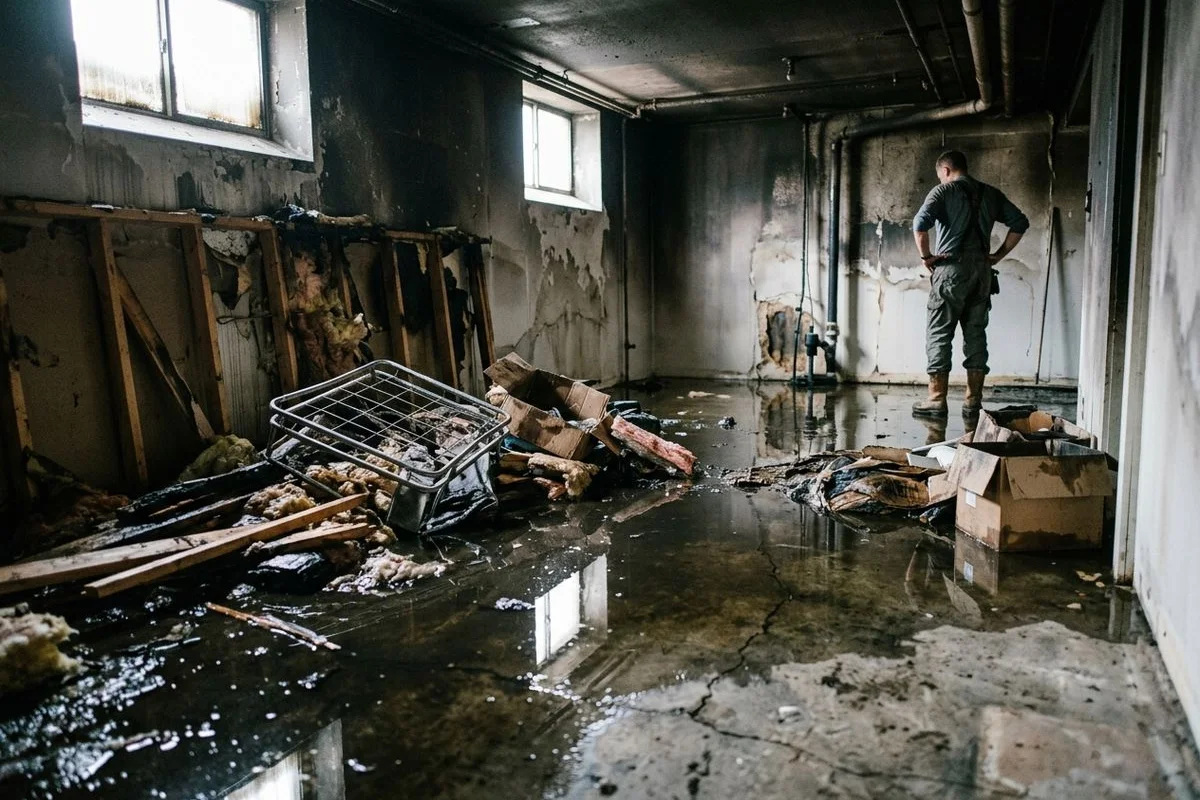
Water from firefighting doesn't wait either. Mold can start growing on a wet surface inside that same 24 to 48 hour window. So the clock on cleanup starts the moment the fire department clears you to go back inside.
In Boulder, that clock matters even more in winter. A hard freeze can lock standing water into a crawlspace or basement before extraction equipment ever gets there, trapping moisture in the framing for weeks.
But speed isn't the same as rushing. A trained crew still runs a full safety check — gas, electrical, structural — before anyone touches a surface.
Did You Know? FEMA's Marshall Fire Mitigation Assessment Team recommends a simple "wipe test" — an alcohol wipe on an unpainted surface — to sort soot and ash into light, moderate, or heavy categories before deciding whether it's a DIY clean or a professional job.[1]
What fire damage cleanup actually covers
Cleanup isn't one job. It's five, done in order.
First, we walk the property in full protective gear and document every room with photos before anything gets touched or thrown away. Insurance adjusters want to see the damage exactly as the fire left it.
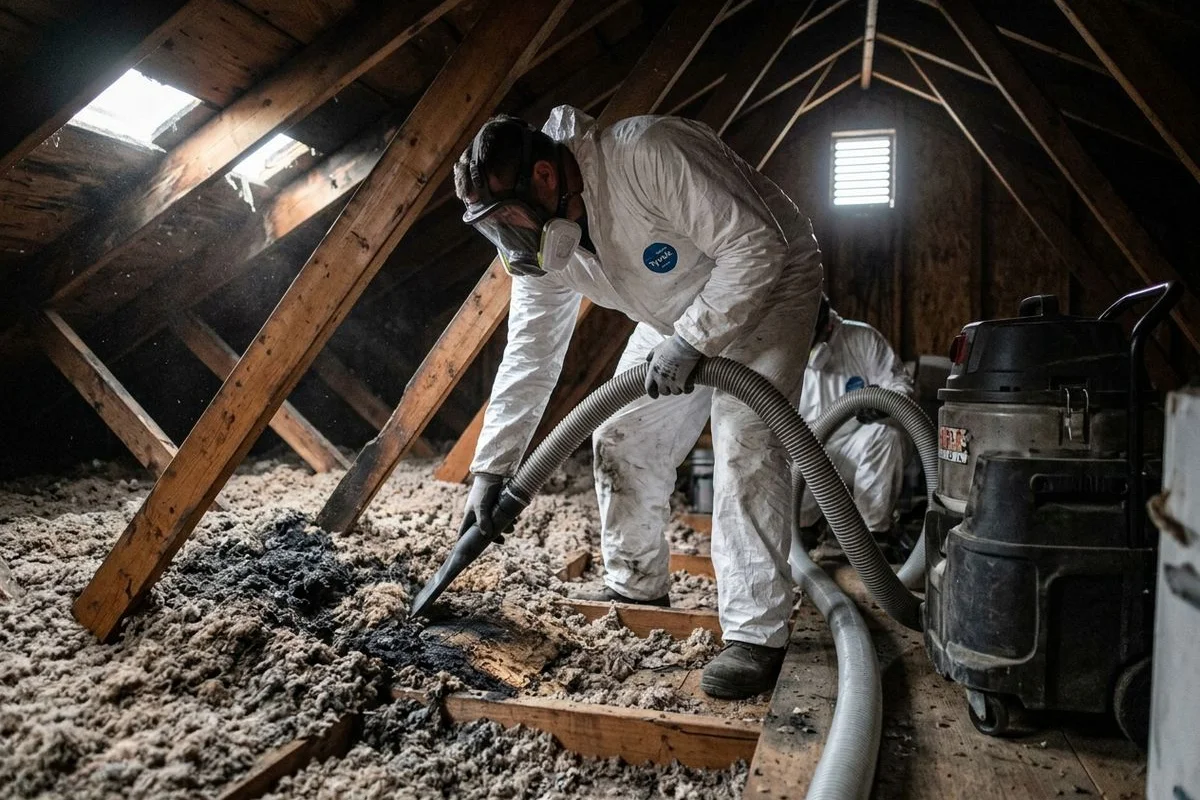
Next comes debris removal — charred materials, spoiled food, and anything with fire or heavy soot damage that can't be saved. Then we pull standing water left behind by the fire hoses, since that water sits on top of ash and turns into a toxic slurry if it isn't extracted fast.
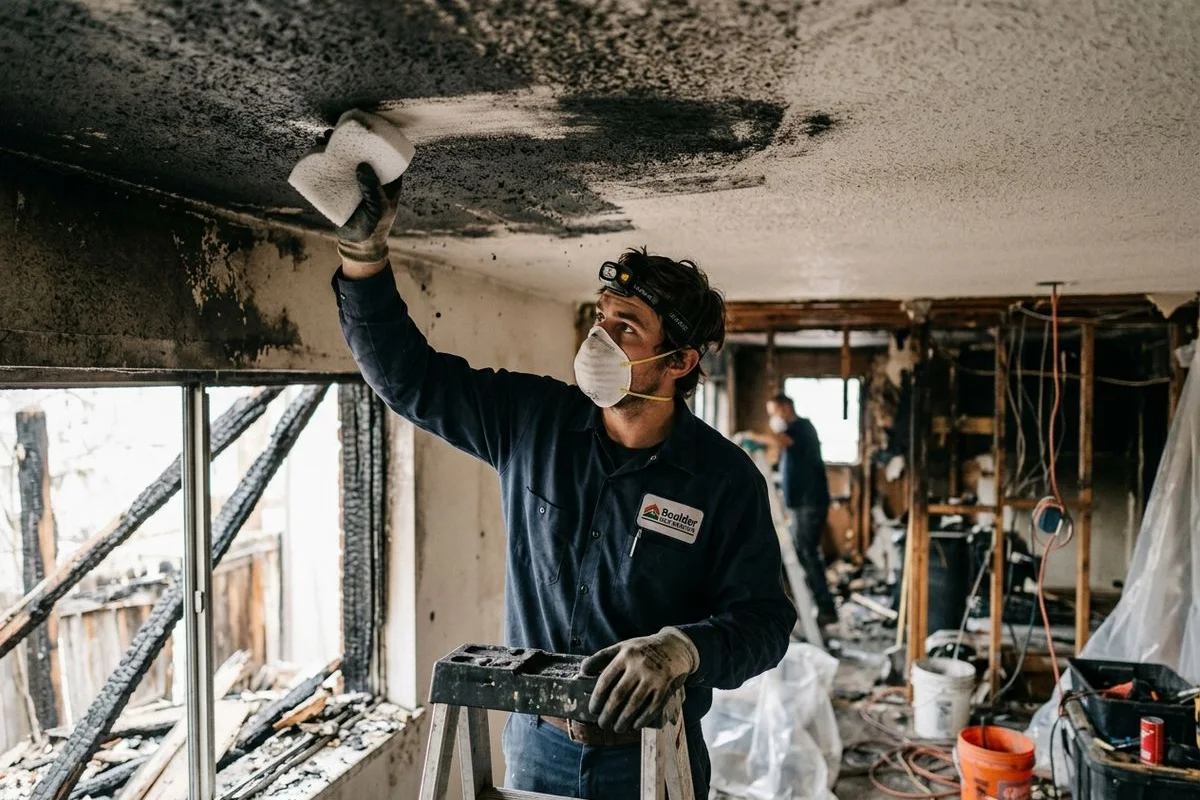
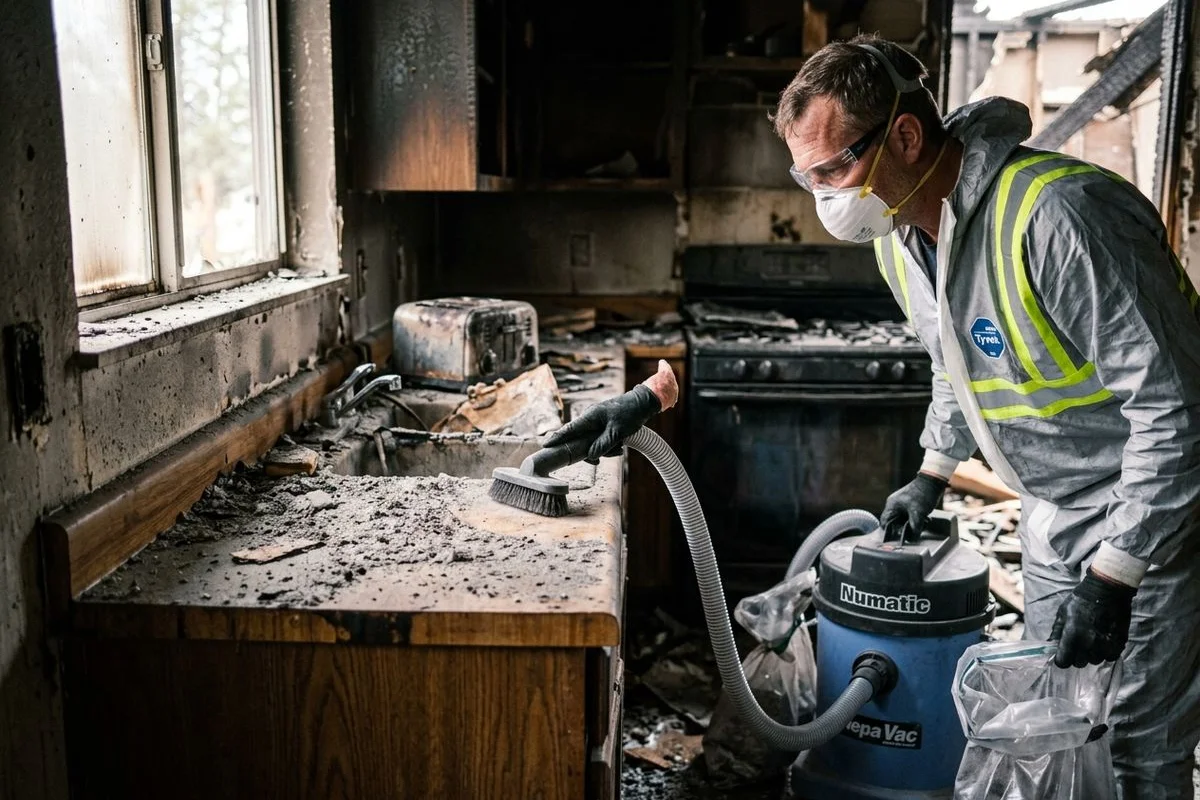
After the bulk of the mess is out, we run a wipe test on hard surfaces in every room. That test tells us whether you're dealing with light, moderate, or heavy soot, and it decides whether a room gets a simple wipe-down or a full HEPA vacuum and degreasing pass.[1]
One thing we see constantly on Boulder County calls goes back to the Marshall Fire. Entire homes never touched by flame still had smoke pulled deep into the HVAC system and ductwork — so the cleanup crew had to treat rooms that looked untouched on the surface.
Once the property is stable, commercial dehumidifiers bring the structure down to a dry standard (see our structural dry-out guide), and any deeper soot staining moves into a full cleaning pass.
Why DIY cleanup after a fire usually backfires
Grabbing a mop and a bottle of all-purpose cleaner feels productive. But wiping soot with the wrong method just grinds it deeper into drywall, grout, and fabric.
Running your HVAC to "air the place out" does the same thing to your whole duct system. Every vent becomes a soot delivery system instead of a fix.
And hauling wet, ash-soaked debris to the curb yourself skips the documentation your adjuster needs. Missing photos here can mean a smaller settlement later.
So the safest move is the boring one. Stop touching things, call a crew, and let the wipe test decide the plan before anyone starts scrubbing.
If windows or doors were damaged, get the property secured right away — an unsecured property invites weather damage and theft on top of everything else.
Our 100% Smoke Odor Guarantee backs every cleanup job
Every cleanup project we run rolls into our 100% Smoke Odor Guarantee. If odor returns within 30 days of completion, we come back and re-treat the property at no charge.
That guarantee only holds because cleanup gets done right the first time — full soot removal, full water extraction, full HVAC check. Skipping any one of those steps is how odor sneaks back in weeks later.
We're BBB Accredited A+ and EPA Lead-Safe Certified, which matters on older Boulder homes where lead paint can end up mixed into the debris stream.
Boulder County and Front Range cleanup coverage
We dispatch 24/7 across Boulder, Longmont, Lafayette, Louisville, Erie, Superior, and Broomfield.
Response time matters most in the first hours after a fire, before soot sets and water soaks into framing. Our crews aim for a 60-minute response window across Boulder County.
Whether it's a single-room kitchen fire or a Marshall-Fire-scale event that hit a whole neighborhood, the first move is the same. Get in, assess, and stop the damage from spreading.
[1] FEMA Marshall Fire Mitigation Assessment Team, Homeowner's Guide to Risk Reduction and Remediation of Residential Smoke Damage (revised April 2025): fema.gov