The cleanup crew just left your Boulder home. The smoke smell is gone and the water is dried out. But the drywall is still cut open, wiring hangs loose, and the trim is ruined.
We've repaired fire damage across the Front Range for over 20 years, and our crew works as a licensed Colorado general contractor. That means the drywall, framing, electrical and finish work on your repair all meet current code the first time, not after a failed inspection.
This page covers what fire damage repair actually includes, what our process looks like, and how insurance pays for it.
So let's start where mitigation ends and repair begins.
Fire damage repair covers what cleanup leaves behind
Mitigation handles the emergency. Extraction crews pull out water, cut away ruined drywall, and treat the smoke smell. Repair picks up from there and puts your home back together.
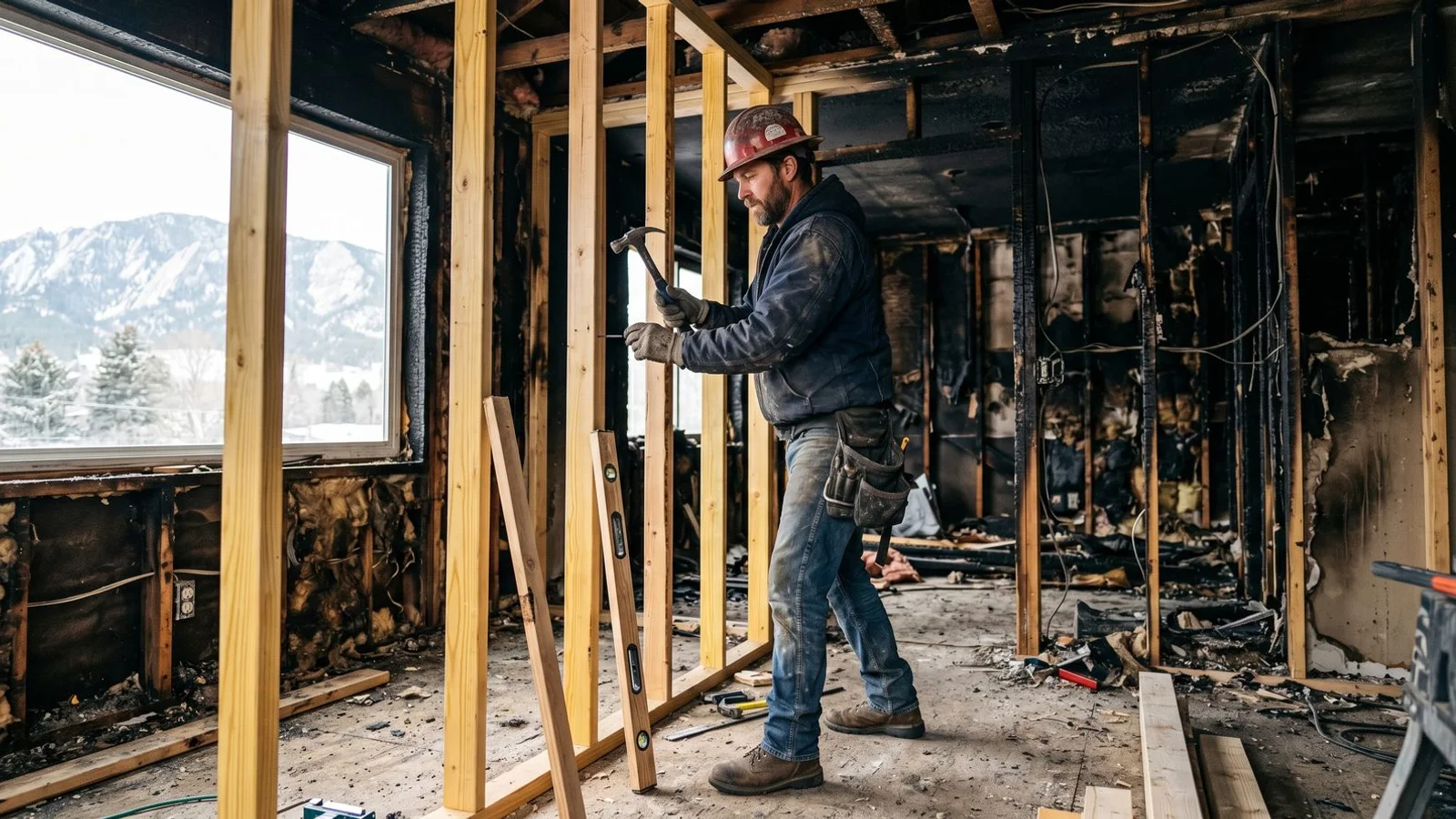
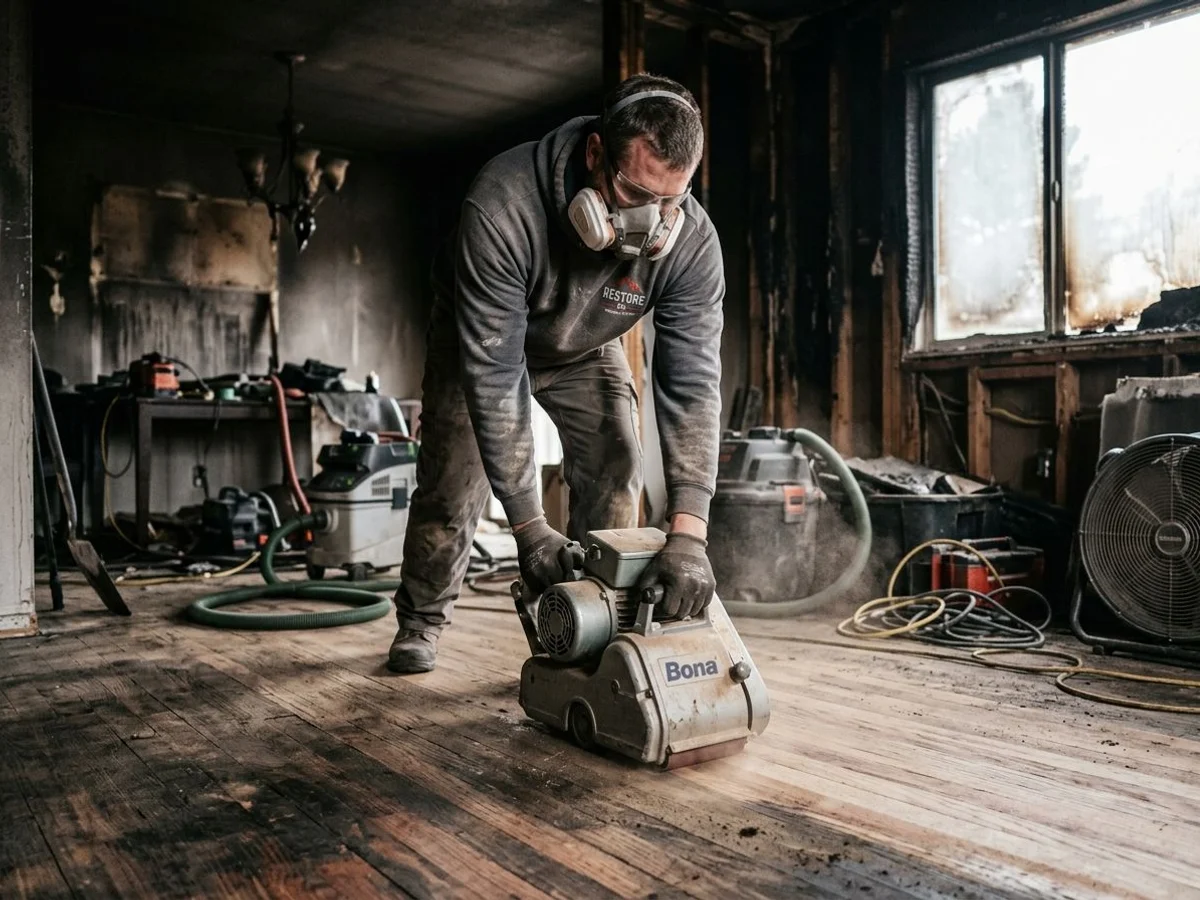
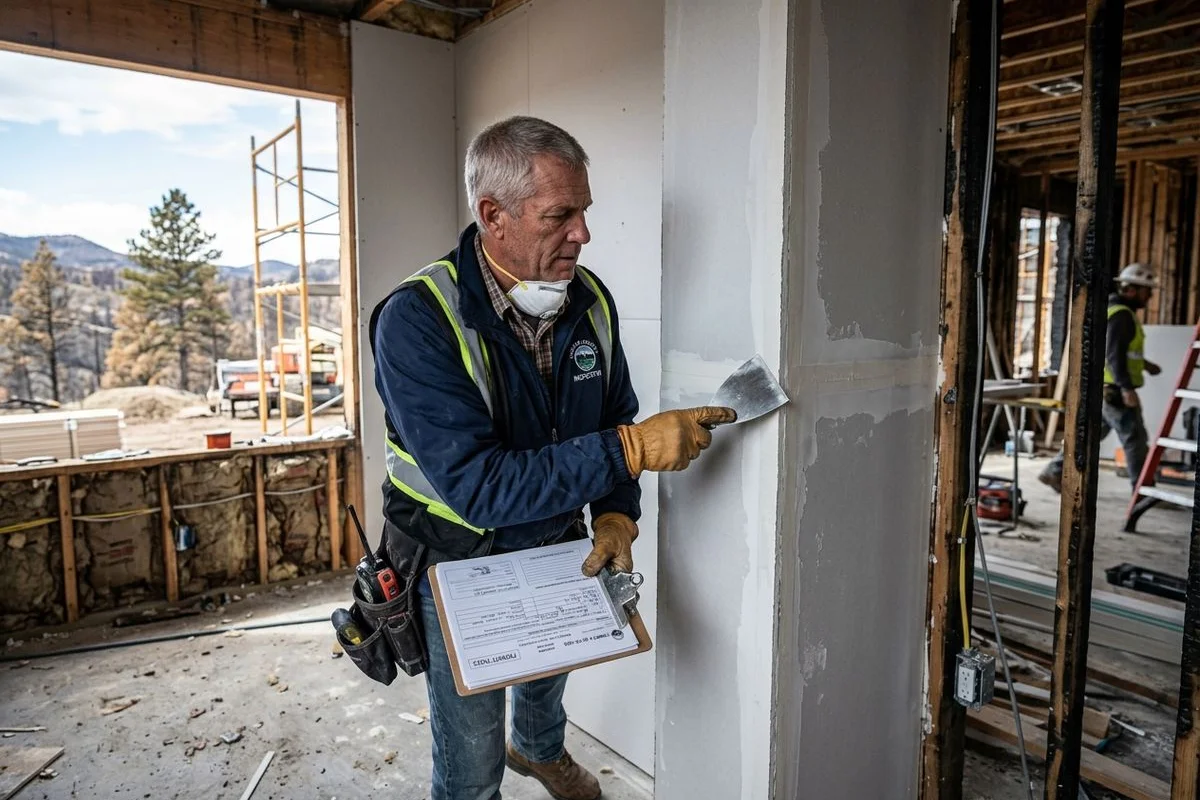
That usually means patching or replacing drywall, repairing charred framing, fixing damaged electrical runs, and refinishing trim, floors and cabinets. In older Boulder homes near downtown and North Boulder, framing repair sometimes uncovers older wiring that needs updating anyway.
Repair is a smaller job than full fire damage reconstruction. Reconstruction rebuilds a home from the studs out after major structural loss. Repair fixes what a smaller fire or smoke event damaged, so the scope and the timeline both stay shorter.
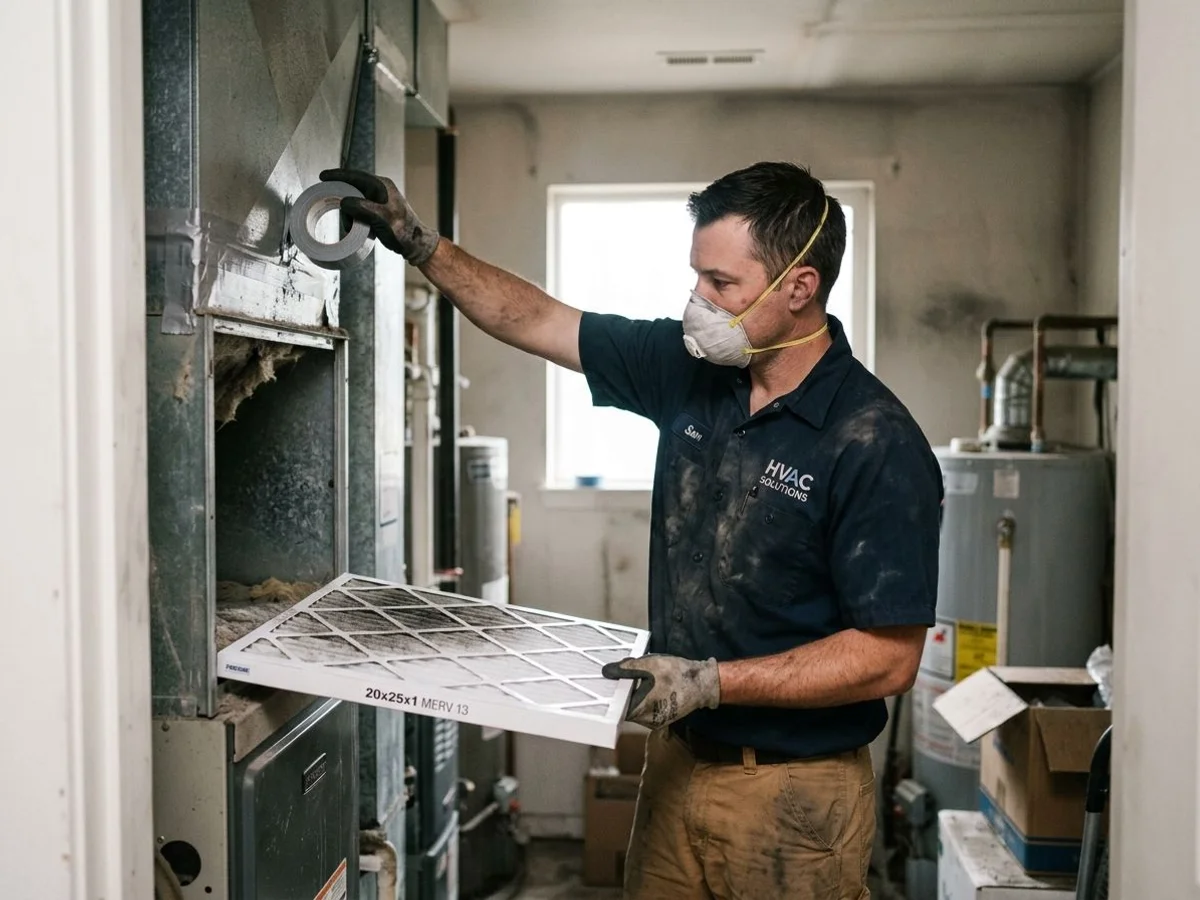
What homeowners don't realize is that repair work isn't always tied to visible flames. After the Marshall Fire, we opened up drywall and ductwork in homes where no flame ever touched the property, but smoke had traveled deep into the HVAC system and needed to be cut out and replaced.
What the repair process actually requires
Every repair starts with an assessment. We walk the property, check moisture and soot readings behind the walls, and write a scope that covers everything the fire and smoke actually touched.
If the repair involves framing, electrical, or other structural work, we pull a permit through Boulder County before we start. Cosmetic-only jobs, like paint and trim, usually skip that step.
Kurtis Reeme and Damaris Reeme are both licensed Colorado general contractors, so the framing and electrical repairs on your project are handled by our own crew, not handed off to a sub we've never worked with.
And in homes built before 1978, we check for asbestos before opening up walls. That's a Colorado requirement, not an optional step.
Why DIY patch jobs and generic handymen fail here
A fresh coat of paint over smoke-damaged drywall looks fine for a few weeks. Then the odor comes back.
Smoke does not stay on the surface. The EPA notes that wildfire smoke moves into a home through open windows, through HVAC systems, and through small cracks and joints in the structure [1]. If a repair crew closes up drywall without checking the framing and ductwork behind it, that smoke stays trapped and starts smelling again once the weather warms up.
General handymen and generalist contractors often skip that step because they aren't trained to test for it. Our technicians hold IICRC FSRT and OCT certification, so soot and odor get treated before we close up a single wall.
Our guarantee and licensed-GC standard
Every repair comes with our 100% Smoke Odor Guarantee. If the smell returns within 30 days of completion, we come back and re-treat it at no cost.
We are BBB Accredited with an A+ rating, IICRC FSRT and OCT certified, and EPA Lead-Safe Certified for older homes. Our crew is licensed to do the general contracting work a repair actually needs, not just the cleanup.
But the biggest difference is who handles your claim paperwork. Damaris Reeme is an insurance claims specialist as well as a licensed GC, so she scopes the repair and works your adjuster directly. Read more on how to file a fire damage insurance claim in Colorado.
Repair coverage across Boulder County
We repair fire and smoke damage in Boulder, Longmont, Lafayette, Louisville, Erie, Superior and Broomfield.
Superior and Louisville still have homes finishing up Marshall Fire repair work years later, mostly smoke-related drywall and duct replacement rather than full rebuilds.
So no matter which Front Range town you're in, one call gets your repair scoped, permitted and started.
Source: [1] U.S. Environmental Protection Agency, "Wildfires and Indoor Air Quality (IAQ)"