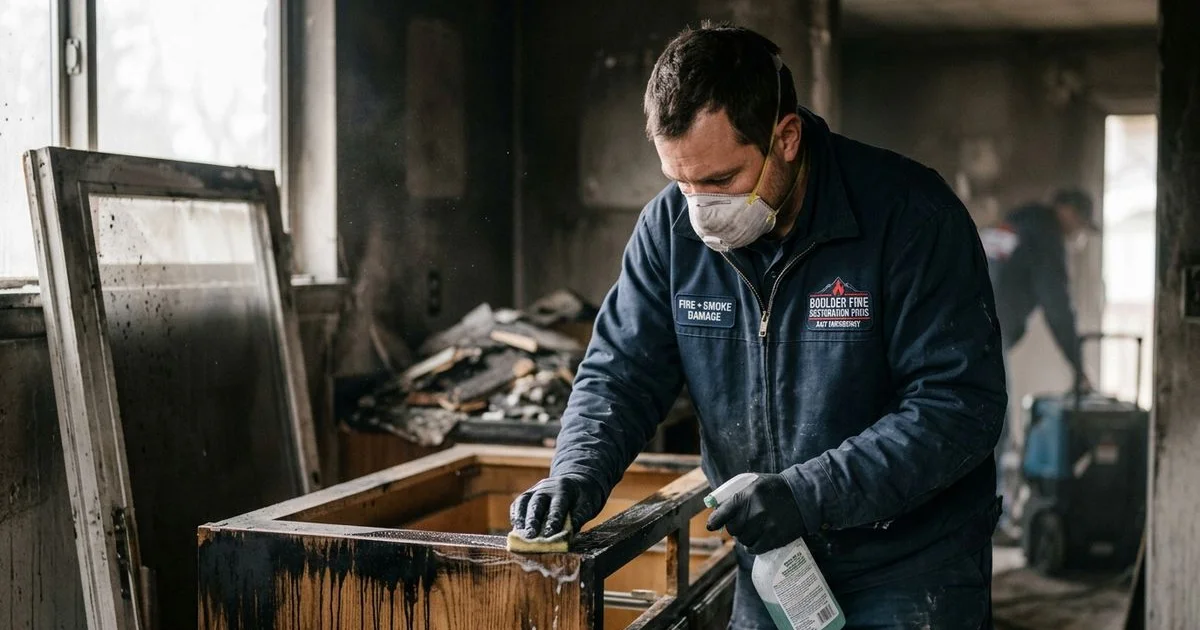
Fire damage restoration in Boulder is chemistry, structure, and timing — not just cleanup
A house fire doesn't just burn what the flames touch. Heat cracks framing lumber from the inside. Firefighting water soaks into subfloors and drywall. And soot starts etching glass, metal, and painted surfaces within hours of the fire going out.
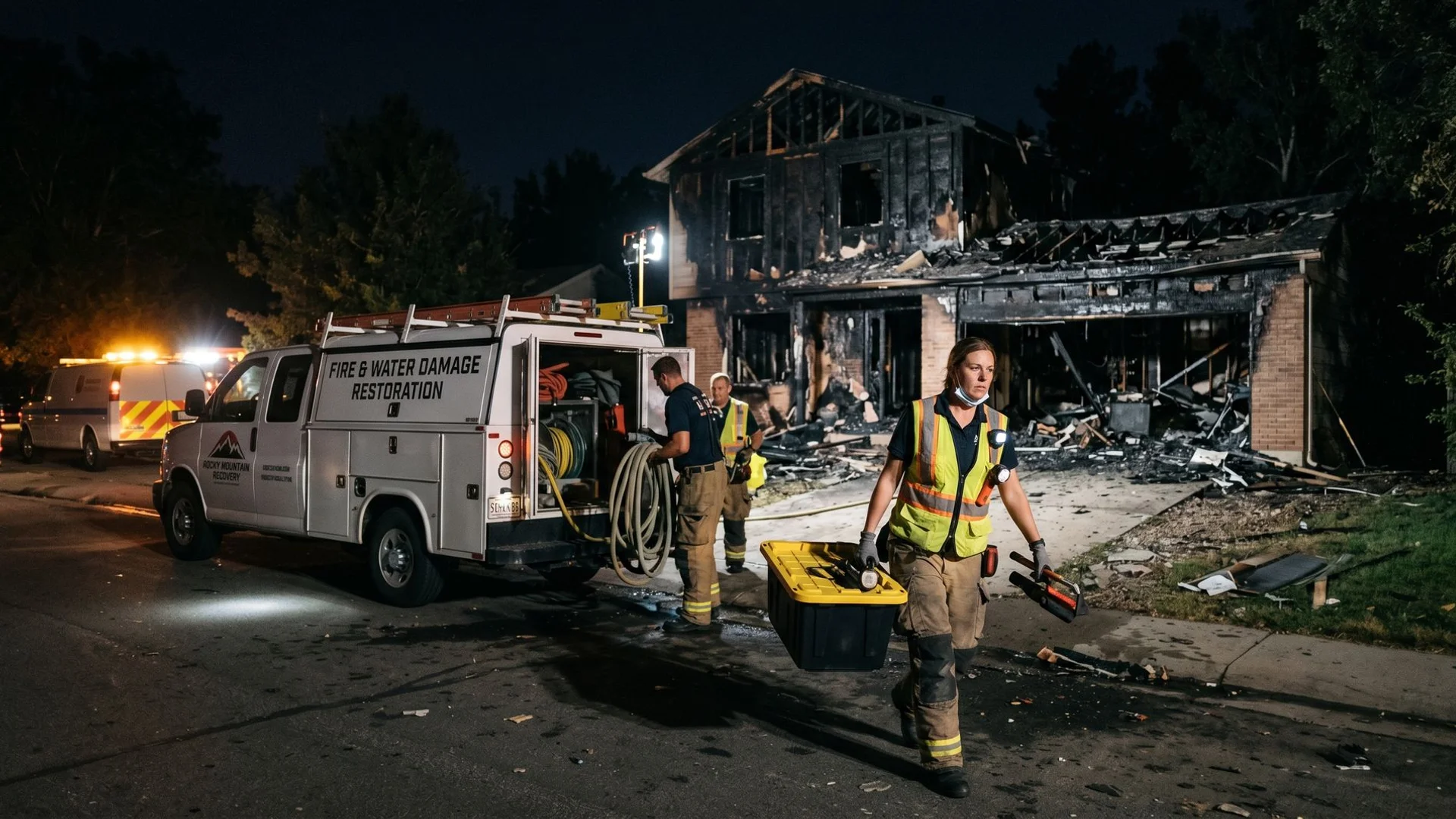
Boulder Fire Restoration Pros has handled this exact combination for more than 20 years across the Front Range — kitchen fires in Longmont, electrical fires in older Boulder homes, and the wildfire smoke that rolled through Boulder County during the Marshall Fire. Our crews are IICRC FSRT certified, so every job follows the same fire and smoke restoration standard, not guesswork.
Real restoration treats the fire, the water, and the smoke together. Skip one and the damage keeps spreading long after the fire trucks leave. A scorched kitchen wall can look fine after a quick cleanup, but if the framing behind it stayed wet, rot and mold start within days.
Boulder's older housing stock adds a wrinkle newer subdivisions don't have. Many homes here were built before modern fire-rated drywall and sealed HVAC returns became standard, so heat and smoke travel further into the structure than they would in a newer build.
What full-service fire damage restoration actually requires
Full-service fire damage restoration is not one job. It's five, done in sequence, by one crew.
- Emergency board-up and tarping to secure broken windows, doors, and roof damage the same day.
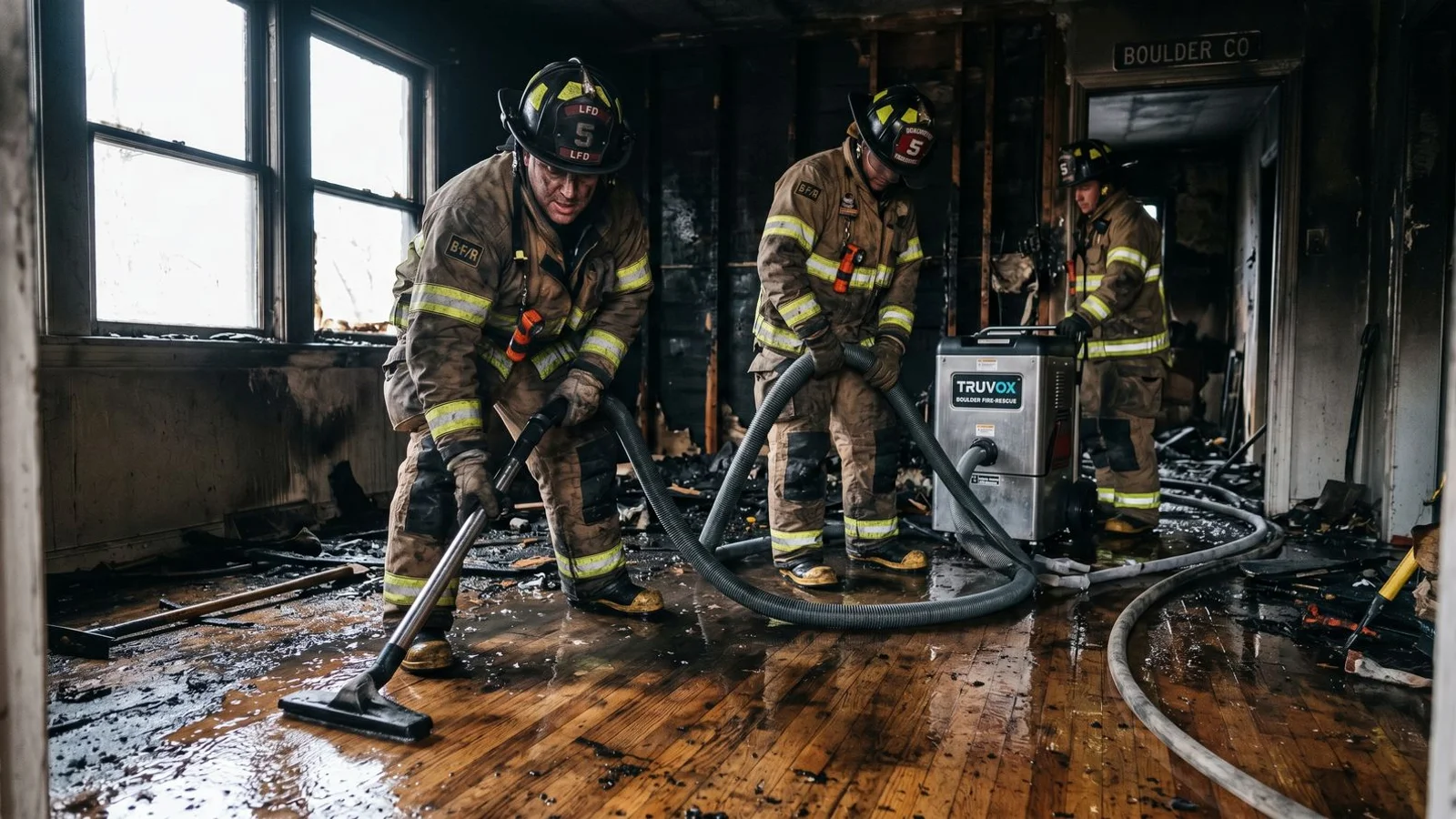
- Water extraction and structural drying, since firefighting water sits in framing and subfloors long after the fire is out.
- Soot and smoke removal, matched to the type of soot — protein, dry, or oil-based — because the wrong cleaning method just smears it deeper.
- Odor elimination using thermal fogging and hydroxyl treatment, not air fresheners that mask the smell for a few hours.
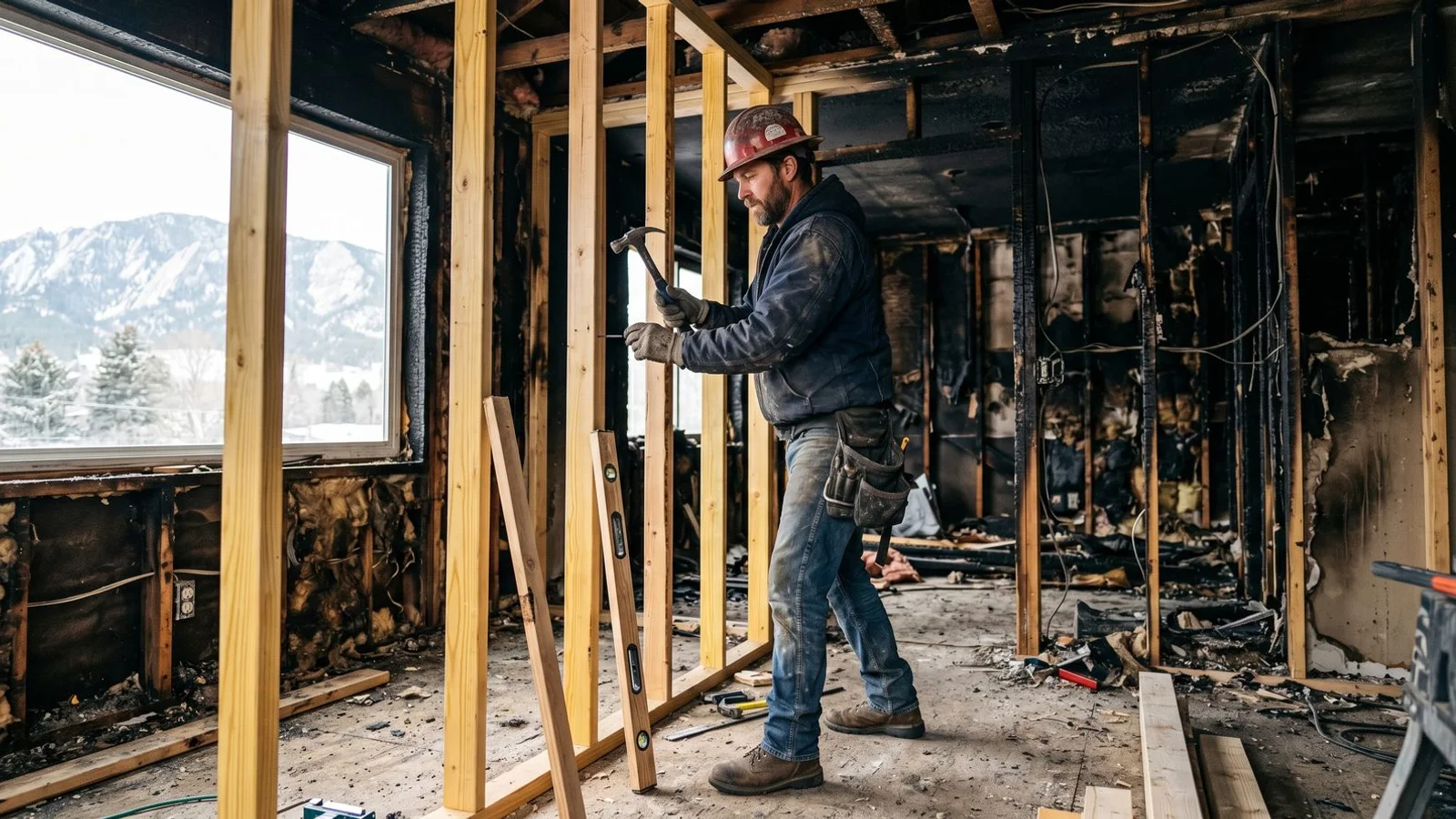
- Reconstruction and insurance close-out, rebuilding framing, drywall, cabinets, and flooring back to pre-loss condition while your adjuster gets Xactimate-standard documentation.
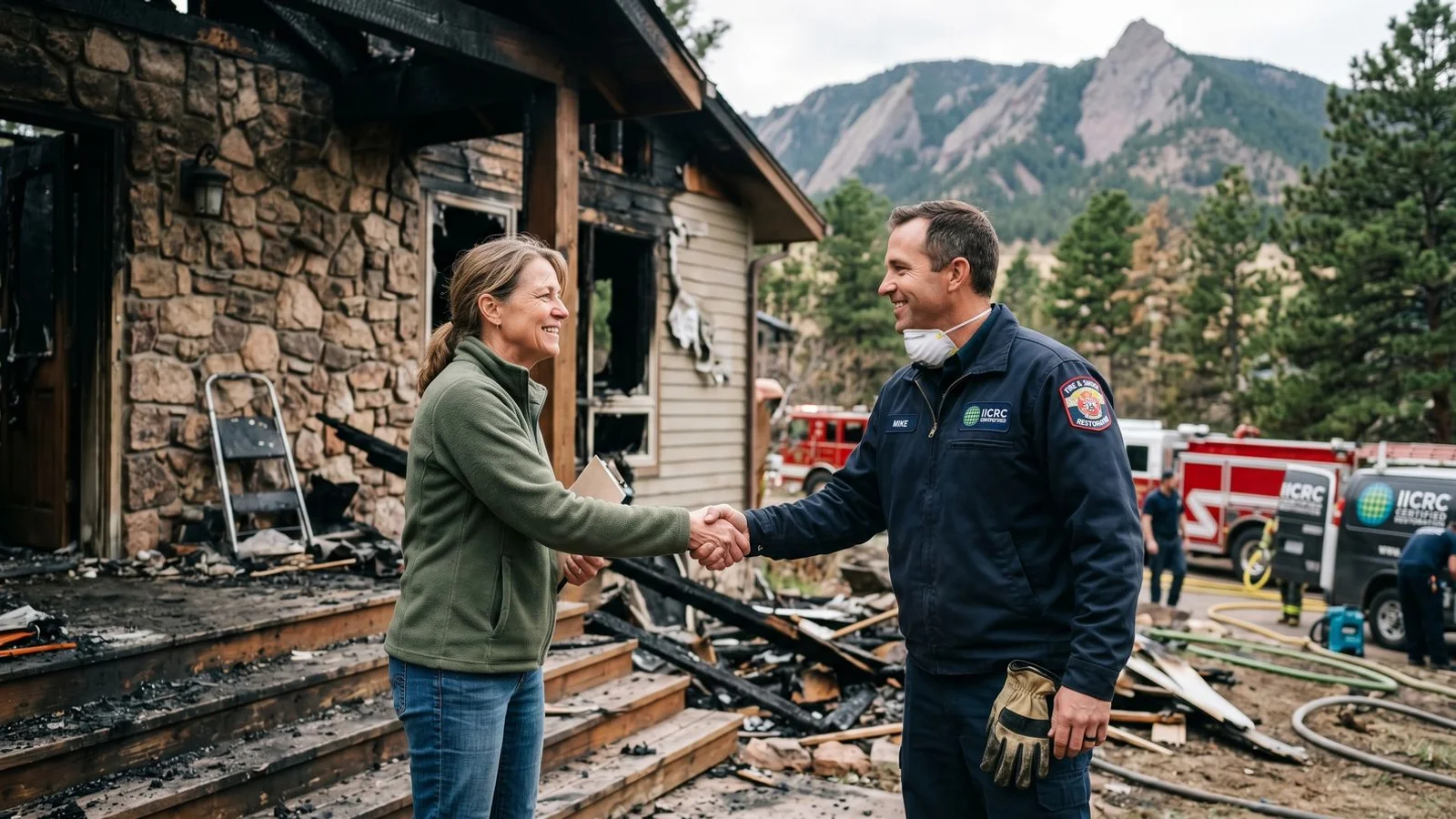
For a Boulder homeowner, this means one project manager and one crew instead of five different subcontractors. And that matters more than it sounds — a homeowner who hires separate companies for board-up, drying, and rebuild loses the paper trail that insurance adjusters need to approve a claim quickly.
This structure works whether the damage came from a stovetop grease fire in Superior or a full structure fire in Lafayette. The order rarely changes. Only the scope does.
If your fire started in the kitchen, our guide on grease fire and protein soot damage covers the protein-soot cleaning that grease fires need. If water is still standing, our guide on structural dry-out after firefighting explains how that process works.
Why DIY and generalist contractors fail on fire damage
It's tempting to grab a shop vac, some bleach, and handle the cleanup yourself. Most homeowners try this once.
The problem is timing. Firefighting water starts growing mold in wet drywall and framing within 24 to 48 hours if it isn't dried professionally [1]. A weekend of airing it out is usually too slow, and running box fans over wet, sooty surfaces just spreads contaminated dust through the rest of the house.
Generalist water-damage or handyman companies run into a different problem. They know water, not fire chemistry. Soot from a grease fire behaves nothing like soot from a synthetic-material fire, and cleaning one the wrong way can etch it permanently into drywall and metal fixtures.
One thing we see constantly on Boulder calls is a homeowner who paid a generalist crew to clean up a kitchen fire, only to call us weeks later because the smoke smell came back and the cabinets started delaminating from moisture trapped behind them. Fixing that costs more than doing it right the first time would have.
What our fire damage restoration guarantee covers
Every restoration project we run follows the ANSI/IICRC S700 standard for fire and smoke restoration, and every smoke or odor job carries our 100% Smoke Odor Guarantee.
If the smoke smell returns within 30 days of us finishing the job, we come back and re-treat the property at no charge. No deductible, no fine print.
We're also IICRC OCT certified for odor control and EPA Lead-Safe certified for older homes where lead paint may be disturbed during reconstruction. Our owner, Damaris Reeme, is a licensed Colorado general contractor who handles the insurance side directly, so the rebuild and the claim move on the same timeline instead of stalling out waiting on paperwork. Our guide on how to file a fire damage insurance claim in Colorado walks through exactly how that works.
Boulder County and Front Range fire damage restoration coverage
We dispatch 24/7/365 across Boulder, Longmont, Lafayette, Louisville, Erie, Superior, and Broomfield.
After the Marshall Fire, we handled homes where the damage was pure smoke intrusion through HVAC systems. No flame ever touched the property, but the smoke odor still ran deep into drywall and ductwork. Wildfire smoke moves through vents and small gaps around windows rather than direct flame contact, so it can contaminate a home that never came close to burning. Our Marshall Fire smoke damage recovery guide covers that distinction in more detail.
Whether your damage is a single-room grease fire or full wildfire smoke intrusion, the same crew handles inspection through final rebuild.
[1] U.S. Environmental Protection Agency, "A Brief Guide to Mold, Moisture and Your Home"