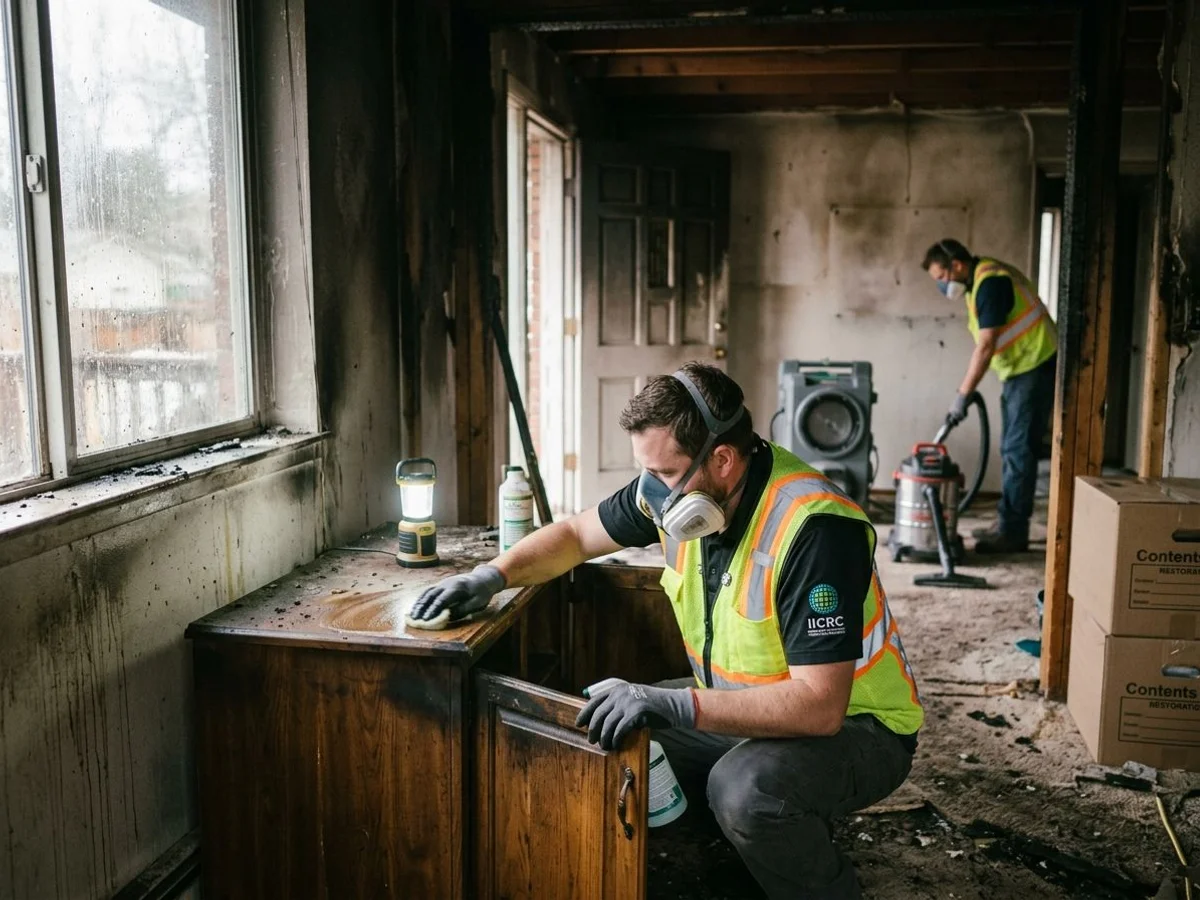
Fire Mitigation Abatement Stops the Damage Before It Spreads
A fire does not stop damaging your home once the flames go out. Soot keeps eating into surfaces. Ash holds moisture. Firefighting water sits in your walls and floors, waiting to grow mold.
Fire mitigation abatement is the work we do in the first hours and days after a fire. We remove hazardous debris, extract standing water, and stop the damage from spreading before full reconstruction starts.
Our team has worked Front Range properties for over 20 years, and every technician on a mitigation job holds IICRC FSRT certification for fire and smoke restoration. We know Boulder homes, and we know how fast a small fire can turn into a total loss if nobody secures the site.
What homeowners do not realize is that mitigation covers more than burned rooms. After the Marshall Fire, we handled homes where the damage was pure smoke intrusion through HVAC systems. No flame ever touched the property, but the smoke odor still ran deep into drywall and ductwork. That home needed full mitigation abatement work just the same.
What Professional Fire Mitigation Actually Requires
Real mitigation abatement follows a set order. Skip a step, and you risk trapping soot or hazardous fibers under work that looks finished.
First, we test before we touch anything. Buildings built before 1975 in Boulder County often used asbestos in old pipe wrap, ceiling tile, and siding. Fire and heavy firefighting water can crack these materials open, and disturbing them during cleanup releases fibers into the air [1]. We test first so nobody breathes something they should not.
Next comes debris and soot removal. Charred material, ash, and soot residue all get cleared using soot-type-specific methods, because dry soot, wet soot, and protein soot each need a different approach.
If firefighters used water, we extract it fast. Standing water left more than 48 hours starts growing mold, so drying out framing and flooring runs alongside the debris work, not after it.
Every step gets photographed and logged. Your insurance adjuster needs that documentation, and so do we, in case a hidden problem shows up later.
Why DIY Cleanup and Generalist Crews Fall Short
It is tempting to grab trash bags and start hauling debris yourself. But a fire scene hides more danger than it shows.
Old insulation and floor tile can carry asbestos you cannot see. Soot is acidic, and scrubbing it with the wrong cleaner just smears it deeper into porous surfaces. A generalist contractor who handles floods, storms, and fires all in one week rarely carries the specialized testing and containment equipment fire debris actually needs.
We have walked into Boulder homes where a well-meaning family member tore out drywall before testing it. That single decision turned a contained job into a full hazardous-material cleanup, and it cost the homeowner weeks of extra time.
Mitigation abatement done right the first time protects your health and your timeline.
Our Guarantee on Every Mitigation and Abatement Job
Every project we complete comes with our 100% Smoke Odor Guarantee. If odor returns within 30 days of completion, we come back and re-treat your property at no charge.
That guarantee only means something if the mitigation work underneath it was done right. So we document every debris load, every test result, and every drying reading before we call a job finished.
You will not get a rushed cleanup followed by a shrug if something surfaces later. You get a written guarantee backed by IICRC OCT-certified technicians who stand behind their own work.
Boulder County and Front Range Coverage
We dispatch fire mitigation abatement crews 24 hours a day across Boulder, Longmont, Lafayette, Louisville, Erie, Superior, and Broomfield.
Older neighborhoods near downtown Boulder and in Longmont often have homes built before 1975, which means asbestos testing is part of nearly every mitigation job we run there. Newer Superior and Louisville rebuilds after the Marshall Fire come with a different challenge: smoke that traveled through HVAC systems into homes the fire never touched.
Wherever your property sits on the Front Range, our trucks and crews are already staged nearby, ready to move fast.
References: 1. U.S. EPA, Dealing with Debris and Damaged Buildings — epa.gov